What Is a High-Efficiency Furnace Conversion in Toronto?
Is your old furnace struggling to keep up with the cold Toronto winters? We know how frustrating it is when energy bills climb while your house still feels chilly.
A reliable heating system is the secret to a comfortable home.
We are going to walk you through exactly what a high-efficiency furnace conversion involves. Grab a cup of coffee, and let’s go through the steps together.
A high-efficiency furnace conversion in Toronto means replacing a mid-efficiency 80% AFUE gas furnace with a 95%+ AFUE condensing unit. We find that this modern technology cuts natural gas use for heating by roughly 15 to 20 percent. The new unit features a secondary heat exchanger to pull additional heat out of the flue gas.
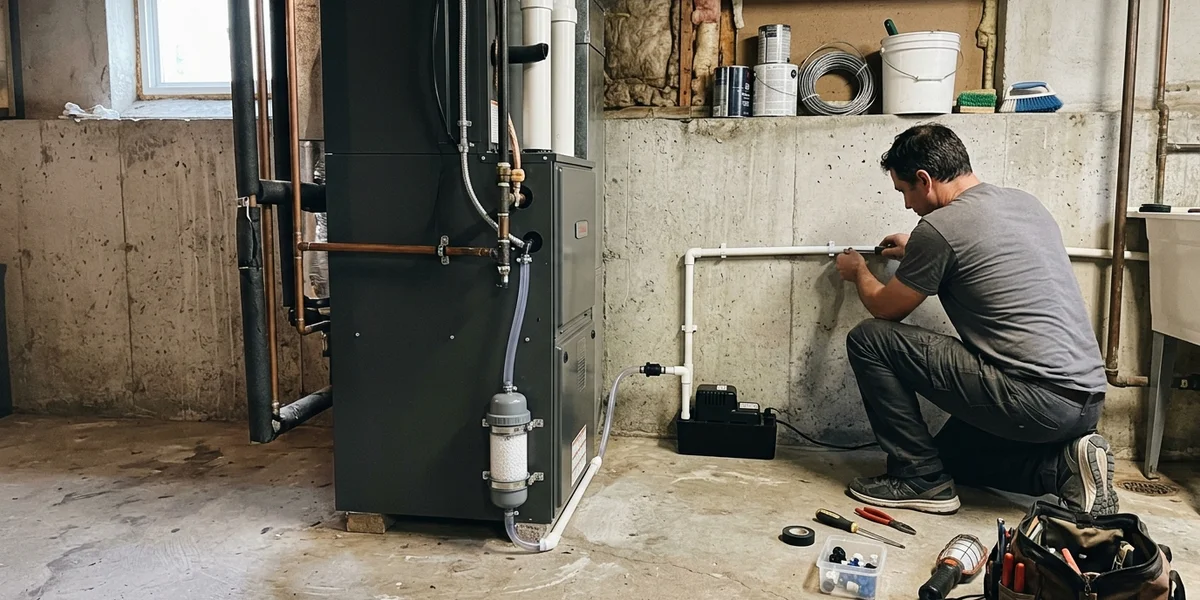
Our conversion process includes several mandatory upgrades to ensure everything runs perfectly:
- Proper Sizing: Performing a Manual J load calculation to prevent short cycling.
- Venting Upgrades: Installing the required System 636 PVC or polypropylene venting.
- Drainage Setup: Fitting a condensate drain with an acidic neutraliser.
- Official Approval: Securing a municipal permit and commissioning by a TSSA G1 or G2 licensed technician.
Installed cost for a 95% AFUE conversion with a popular brand like Trane or Lennox runs $5,500 to $8,500 CAD in the Greater Toronto Area, before rebates. Our ENERGY STAR certified installers file the rebate paperwork on your behalf to help offset that initial price.
The 3 Ontario Rebates Available on a 95% AFUE Install
Financial incentives can be confusing, so we stay on top of the current provincial and federal programs to ensure you never miss out on available funds. Our administrative team helps you apply for the active programs to maximize your return on investment.
3 Active Funding Options
- Enbridge Home Efficiency Rebate Plus (HER+). Up to $6,500 CAD when you combine your 95% AFUE furnace upgrade with qualifying envelope improvements like insulation.
- Canada Greener Homes Grant. Up to $5,000 CAD for eligible homeowners upgrading to a high-efficiency system.
- Seasonal manufacturer and utility promotions. Brands like Lennox or Trane frequently run limited-time discounts throughout the year. We flag these specific brand promotions when they apply rather than building them into a quote that might expire.
Program rules, funding levels, and assessment requirements change frequently. We confirm your eligibility in writing before you commit to any project.
The application paperwork requires careful attention to detail. We file all the equipment documentation directly on your behalf.
How Much Does a High-Efficiency Furnace Save in a Toronto Home?
Natural gas rates keep climbing in Ontario, making heating efficiency highly valuable. We love showing homeowners exactly how much they can reduce their monthly utility bills.
The real financial saving comes directly from the efficiency gap between the unit you currently have and the one you install. Our experts mapped out the average natural gas reductions you can expect below.
| Current unit | Efficiency | Approximate heating gas reduction with 95% AFUE |
|---|---|---|
| Pre-1990 gravity or atmospheric | 55 to 70% AFUE | 25 to 35 percent |
| 1990s to 2000s mid-efficiency | 78 to 82% AFUE | 15 to 20 percent |
| Early condensing unit | 90 to 92% AFUE | 3 to 5 percent |
The last row is the honest part of that table because upgrading an existing 90%+ unit simply does not pay off. We always advise clients in that situation to spend their money on different upgrades instead.
Upgrading your attic insulation to the current Ontario Building Code target of R-60 provides a much faster return on investment. Our advisors might also suggest duct sealing or installing a cold-climate heat pump for shoulder-season heating.
What the Conversion Actually Changes in Your Home
Swapping to a condensing furnace requires a few noticeable physical changes in your utility room. We want you to know exactly what to expect before the installation day arrives. The modifications ensure your system runs safely and meets all modern building codes.
Key Installation Updates
- Venting: The masonry chimney or B-vent is abandoned for heating purposes and replaced with a sidewall-terminated PVC or polypropylene intake and exhaust pair. We ensure the new vents meet all clearance requirements from windows, doors, meters, and grade.
- Condensate: A condensing furnace produces acidic wastewater that requires proper drainage. We install a neutraliser to treat this liquid before it reaches a floor drain, or add a condensate pump where no gravity drain exists.
- Chimney: The masonry liner will likely need resizing if your water heater still vents into the old chimney to prevent dangerous drafting issues. We check this critical detail during the initial assessment rather than discovering it after the fact.
- Comfort: Most new condensing units feature variable-speed ECM blowers that use up to 75 percent less electricity than older standard motors. We pair these blowers with two-stage or modulating heating, creating longer, gentler cycles that eliminate cold spots.
Homeowners often notice the even temperature distribution long before they notice the lower gas bill. We regularly hear customers say their home has never felt more comfortable.
When to Consider a Hybrid Instead
Sometimes a traditional gas furnace is not the absolute best fit for your specific lifestyle goals. We frequently install hybrid setups for clients who want total year-round climate control.
A hybrid approach is perfect if you want efficient cooling in the summer alongside reliable winter heating. Our technicians can pair a cold-climate air-source heat pump with your gas backup to create a highly efficient dual-fuel system.
The Benefits of a Dual-Fuel Setup
- Smart Switching: The configuration changes the heat source automatically at a set balance point.
- Cost Optimization: Heat pumps operate at up to 300 percent efficiency during milder weather to keep utility costs down.
- Year-Round Comfort: You get reliable air conditioning all summer and powerful gas heating all winter.
This specific dual-fuel option is covered in detail on our page about heat pump repair and cold-climate heating. We understand that some homes might only need a straight like-for-like swap without the high-efficiency upgrade. You can review the details for that specific project under furnace replacement Toronto.
Our full set of published CAD scope bands is available directly on the furnace repair Toronto homepage.
Every house has unique heating needs based on its layout and existing ductwork. We are ready to answer any questions you have about selecting the perfect equipment.
Reach out today to schedule your personalized home energy assessment and claim your 2026 rebates!