Are you sitting in a chilly room right now wondering if your old heating system is finally calling it quits? We know how stressful it can be to face a major home upgrade in the middle of a freezing Canadian winter.
The good news is that setting up a new heating system does not have to be a headache.
Our team is going to walk you through the exact steps we use for a successful furnace installation Toronto homeowners can rely on, and I think you will be surprised at how clear the whole process actually is. So, grab a warm cup of coffee, and let’s go through everything you need to know to make a smart choice for your home.
What Is a Code-Compliant Furnace Installation in Toronto?
A proper, legal setup in Toronto goes far beyond just swapping out a metal box in your basement.
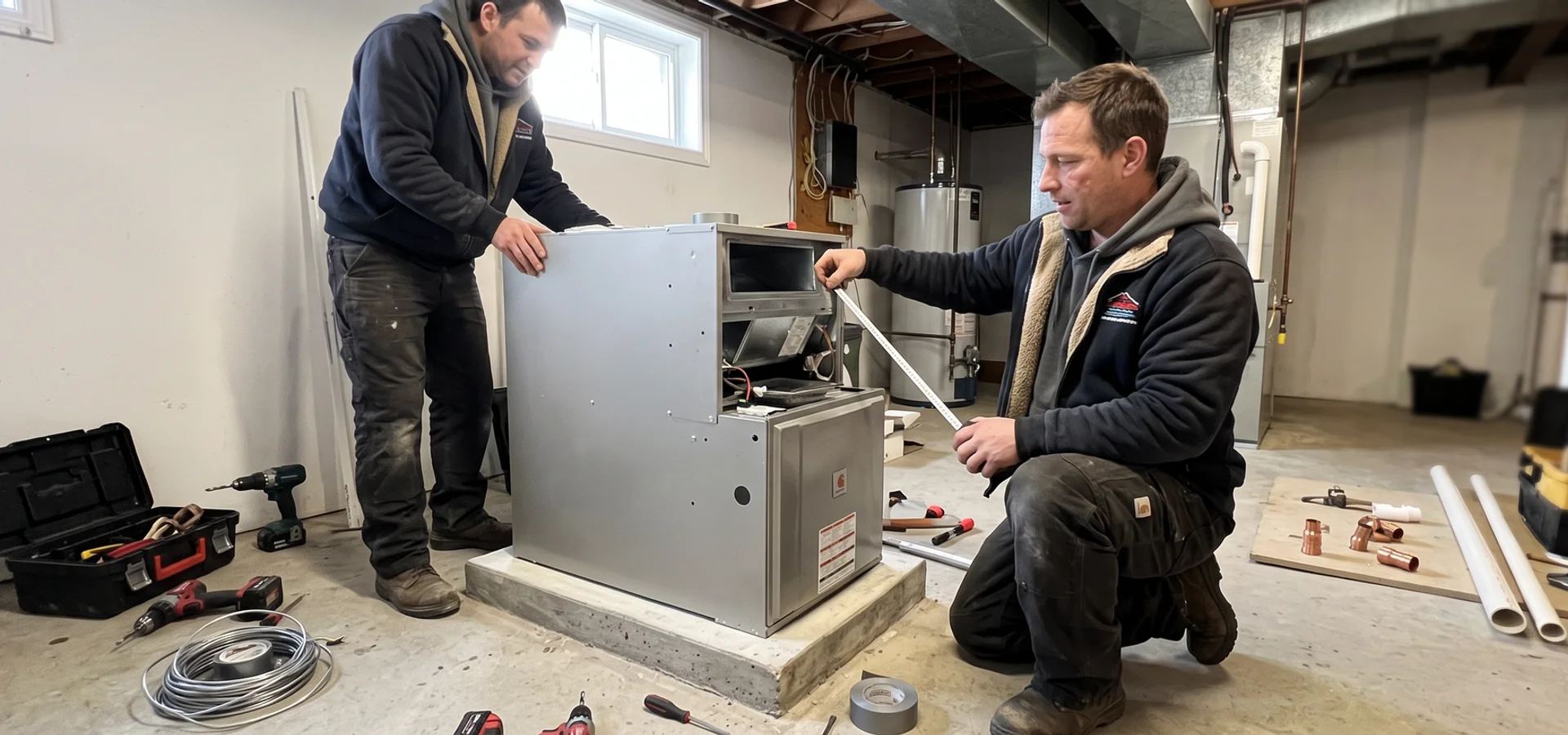
We always make sure the job complies with the latest rules, including the strict CSA B149.1 (2025 Edition) and its 2026 amendments. This means your new gas furnace is sized, mounted, vented, and wired by a certified TSSA G1 or G2 technician.
Every home in Canada must now meet a federal minimum efficiency rating of 95% AFUE for new residential gas furnaces.
- Federal Efficiency Standards: The 95% AFUE rating ensures that 95 cents of every dollar you spend on gas turns directly into heat for your family.
- Municipal Approvals: Our technicians verify that your setup meets Ontario Building Code Part 6 and includes a legal municipal permit.
- New CO Alarm Laws: Ontario Regulation 87/25 now requires a working CO alarm on every single storey of a home with a gas furnace.
We take this seriously and check your alarms during the mandatory commissioning process. A complete job finishes with a combustion analysis, a CO verification check, and a static duct pressure reading.
The total installed cost runs between $4,000 and $8,500 CAD depending on the efficiency and complexity of the job.
5 Things That Decide Whether an Install Performs
You might buy the most expensive equipment on the market, but its actual performance depends entirely on how it is put together.
We see homeowners make the same expensive mistakes because they skip crucial planning steps. A flawless setup requires attention to five major details.
Here are the five factors that guarantee your new heater works perfectly:
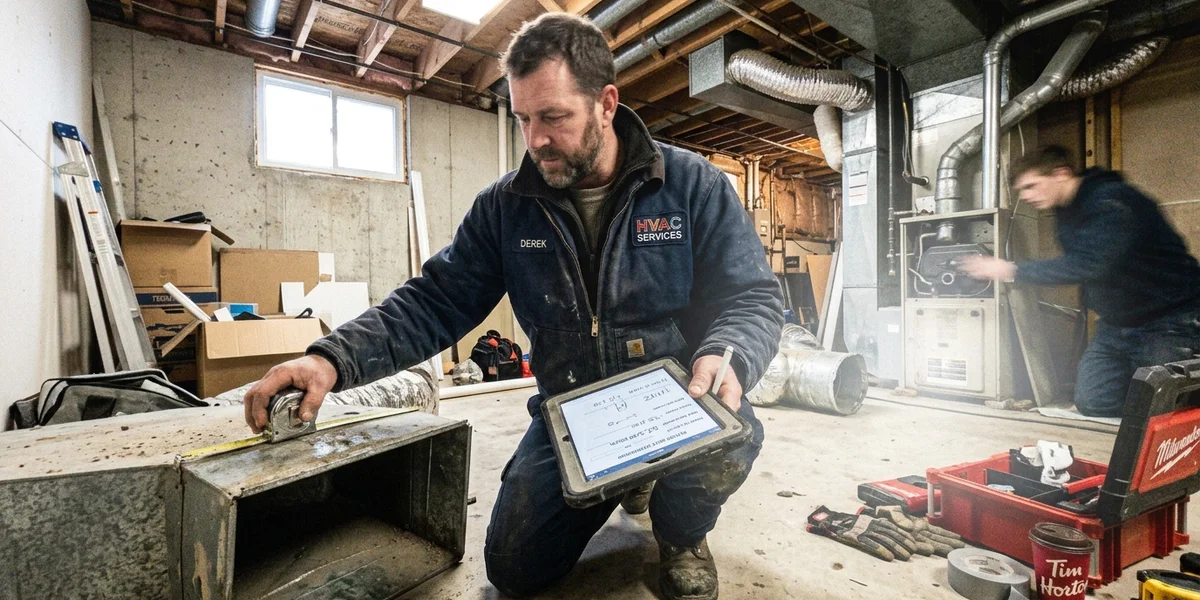
- Heat-loss sizing. The exact BTU rating must come from a proper Manual J calculation. Oversizing causes short cycling, uneven floor temperatures, and early wear on ignition parts.
- Return air capacity. Older Toronto homes routinely suffer from undersized return vents. High static pressure will kill a blower motor and starve the airflow, regardless of the unit’s brand.
- Venting path. A condensing unit requires ULC S636 certified venting with the correct slope and support. PVC pipe safely handles exhaust temperatures up to 65ºC, while CPVC is required for hotter exhaust up to 90ºC. Mixing different brands of pipe or cement violates code and voids the warranty.
- Gas line capacity. Your existing pipe must supply the new unit’s input rating at the required pressure, even with every other gas appliance in the house running.
- Commissioning. An untested furnace is a massive question mark. Manifold pressure, temperature rise, combustion efficiency, and CO levels all get measured and officially recorded before we leave.
Equipment Choices That Actually Change the Result
Picking the right machinery can feel overwhelming with all the technical jargon out there.
We find that focusing on the specific features that directly affect your comfort and electricity bill makes the decision much easier. The type of burner and the blower motor inside the cabinet are the two biggest game changers.
Single-Stage and Two-Stage Options
Single-stage models run at one constant speed, which makes them the most affordable option.
These units are perfectly reasonable for a small, tightly insulated house. Two-stage units are usually the sweet spot for most families.
They run at roughly 65 percent capacity most of the time and only kick into high gear during severe cold snaps. Longer, gentler heating cycles naturally even out the temperature between floors. This completely solves the common cold-basement complaints we hear in larger Vaughan, Richmond Hill, and Brampton homes.
Modulating Burners and ECM Blower Motors
Modulating models feature a special gas valve that adjusts the flame output continuously. They deliver the tightest temperature control and the quietest operation, though they do carry the highest upfront price tag.
The blower motor is the other half of the comfort equation.
A variable-speed Electronically Commutated Motor (ECM) uses brushless DC technology to maintain steady airflow even as your air filter loads up with dust. These smart motors consume around 400 kWh per year compared to the 1,000 kWh used by an older permanent split capacitor (PSC) motor. That efficiency easily saves you $80 or more annually on your Toronto Hydro bill, especially if you run the fan continuously for better air filtration.
How Much Does Furnace Installation Cost in Toronto?
Budgeting for a major home repair is often the most stressful part of the process.
We want to be completely transparent about where your hard-earned money is actually going. A standard setup in the Greater Toronto Area usually ranges from $3,500 to $8,500 CAD.
The exact price heavily depends on the unit you select, the length of the new exhaust pipes, and the physical access to your mechanical room. A straight swap in a wide-open suburban basement in Maple sits at the lower end of that spectrum. A condensing conversion hidden in a narrow heritage home with a long, complicated vent run will naturally sit much higher.
Here is a quick breakdown of common extra costs:
- Labor: About 25 to 35 percent of the total bill, usually around $1,200 to $1,500, covers the expertise of a licensed technician.
- Duct sealing and inspection: Quoted separately at $299 to $899 CAD if your old sheet metal is leaky.
- Smart thermostats: Installation runs $199 to $549 CAD for homes that need new staging wires or a dedicated C-wire.
When Installation Is the Right Word, Not Replacement
There is a distinct difference between putting in a brand-new system from scratch and simply swapping out an old one.
We use the term installation when dealing with a completely blank slate. This applies to new custom builds, home additions, basement finishing projects that relocate the mechanical room, or a first-time upgrade from electric baseboards. In these fresh scenarios, there is no existing unit to use as a baseline, so the heat-loss calculation carries the entire weight of the sizing decision.
If you simply need to swap an aging heater for a similar model, you will want to look at our guide on furnace replacement. Sometimes, your main goal is chasing better energy efficiency and cashing in on local utility rebates. If that sounds like your situation, check out the details on a high-efficiency furnace conversion. For a complete list of our service bands and pricing across the city, see our main page for furnace repair Toronto. A reliable furnace installation Toronto upgrade will keep your family warm for years to come.