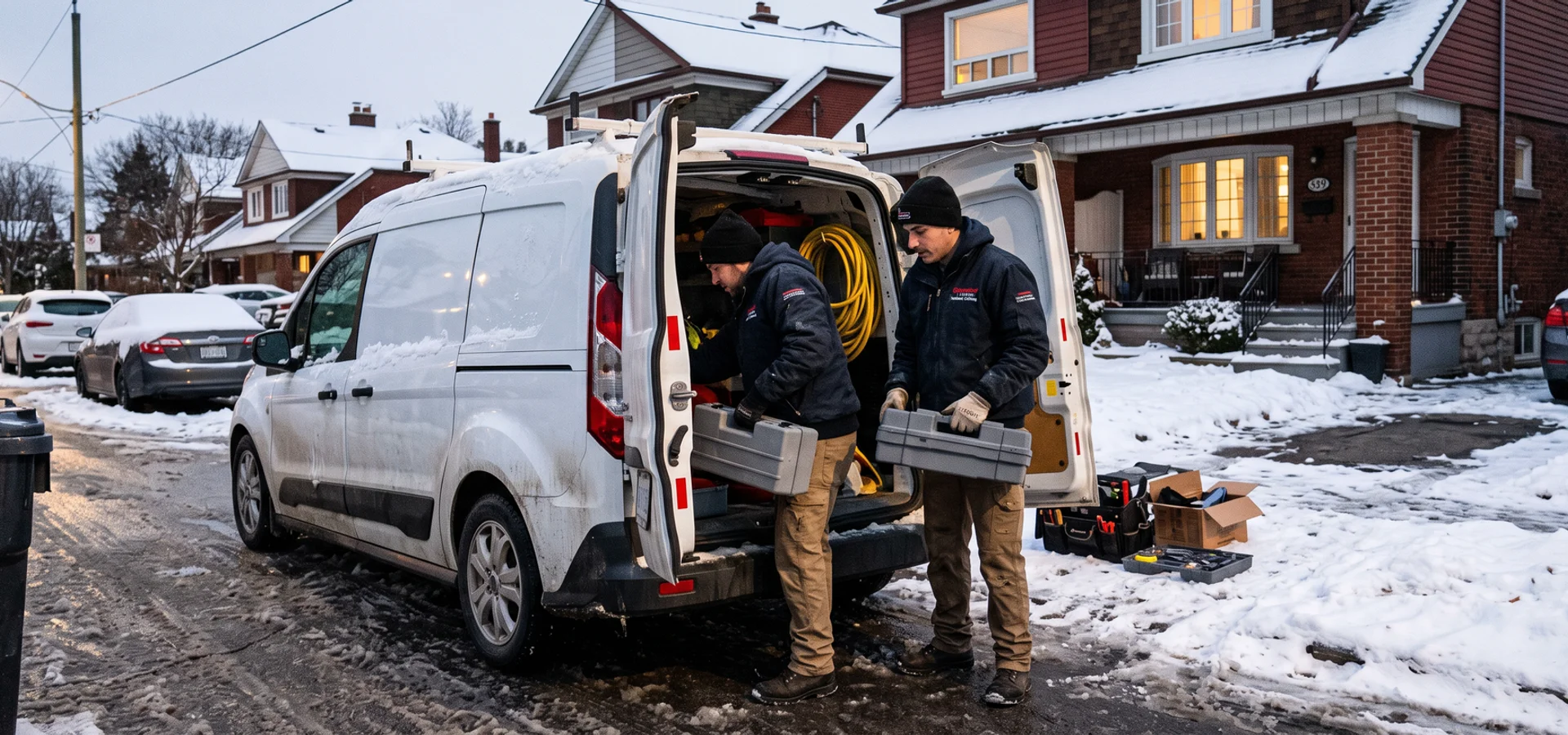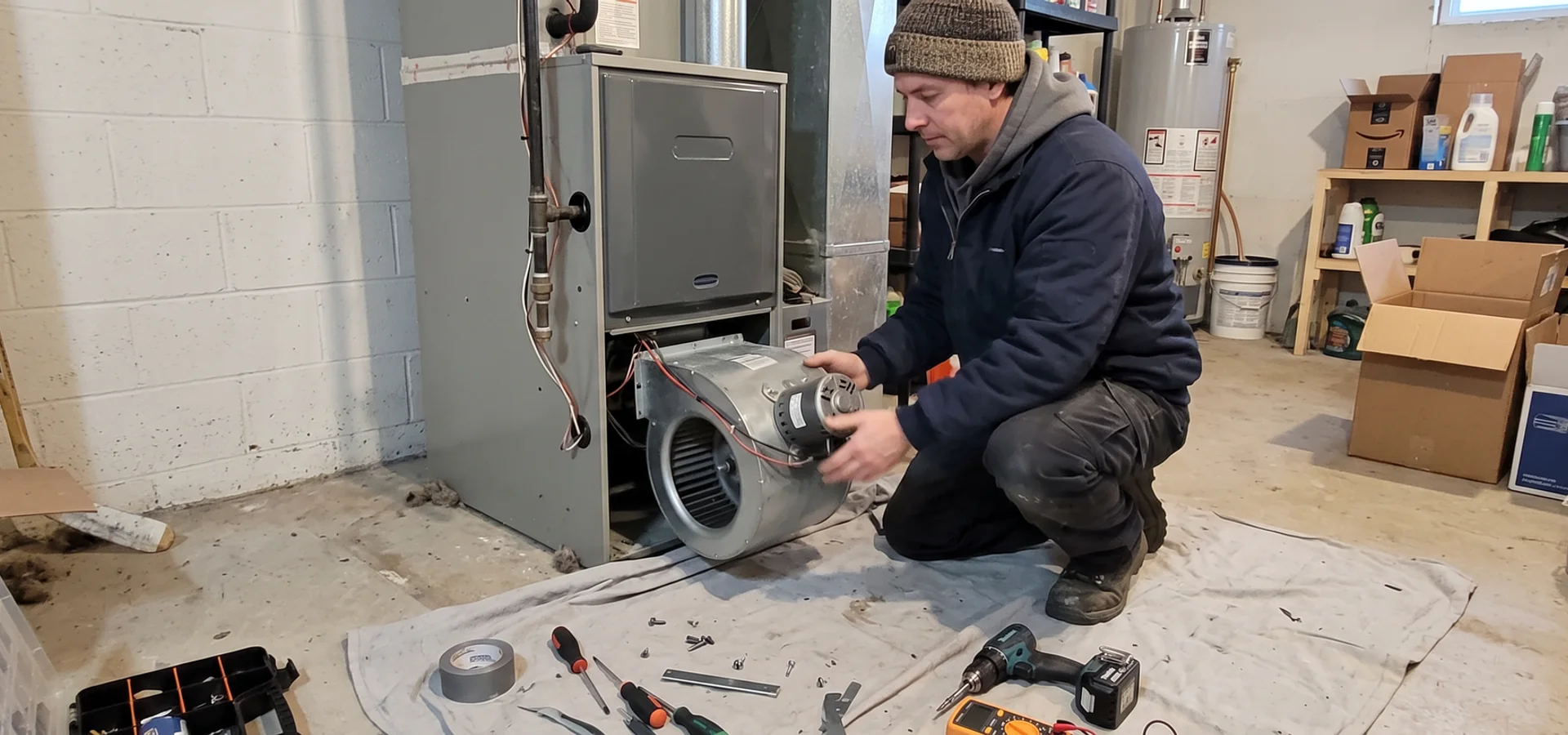
Have you ever woken up on a freezing January morning to a furnace that sounds like it is running, but absolutely no warm air is coming out of the vents? When you need a fast blower motor replacement, Toronto winters do not give you much time to wait. We see this exact scenario play out across the Greater Toronto Area every year.
It can definitely be a stressful moment for any homeowner.
You might be surprised to learn that this repair is often much simpler than replacing the entire heating system. The blower motor is just the specific fan component that pushes heated air from the furnace through your duct system. Our team replaces both older PSC (permanent split capacitor) motors and modern ECM (electronically commutated motor) models every single day.
These newer ECM variable-speed motors are standard on high-efficiency systems and offer incredible energy savings. A typical replacement job involves checking the run capacitor, measuring the motor amp draw, and inspecting the blower wheel condition.
We always make sure to install a warranty-valid Ontario distributor part. After that, testing the static duct pressure, temperature rise, and combustion guarantees everything runs safely.
Costs run $450 to $750 CAD for a standard PSC motor and $650 to $950 CAD for an ECM unit. A diagnostic visit usually runs $99 to $149 CAD, which is waived if the repair is completed on the same visit. So grab a warm cup of coffee, and let’s go through the exact steps together.
We will show you everything you need to know about fixing your furnace airflow.
5 Signs Your Furnace Blower Motor Is Failing
Catching a failing motor early can save you from a completely cold house in the middle of a Canadian winter. We recommend watching out for these specific warning signs before the system completely shuts down. A proactive approach gives you time to plan a repair instead of paying premium emergency rates. Here are the five most common symptoms you might notice.
- Humming with no rotation. Power is reaching the motor but it will not start. We often find that this is actually a capacitor fault rather than a broken motor, which is why testing the capacitor is always the first step.
- Weak airflow at the registers. You might feel a reduced output of air even when the furnace is firing normally. This symptom is often paired with specific rooms in your house that never quite reach the target temperature on your thermostat.
- Grinding, squealing, or rumbling. These harsh noises usually indicate worn bearings or a blower wheel that is scraping against the metal housing. Running the system in this state usually ends up destroying both the motor and the wheel.
- High-limit lockouts. The furnace overheats because the airflow across the heat exchanger has dropped significantly. The high-limit switch then cuts the burners as a built-in safety response, which means this is a protective feature and not a nuisance fault.
- Burning smell from the furnace cabinet. This alarming odor comes from overheating electrical windings inside the motor. Shut the heating system down immediately and call a professional, because this is the final stage before a failed motor creates a much bigger electrical hazard.
When to Call a Toronto HVAC Professional
Attempting a DIY fix on a gas furnace can easily void your manufacturer warranty. We always remind homeowners that brands like Lennox, Carrier, and KeepRite require certified OEM (Original Equipment Manufacturer) parts installed by licensed technicians. Doing the work yourself can leave you completely unprotected if the heat exchanger cracks next year. An official repair guarantees your home stays compliant with local Ontario building codes.
Why We Test the Capacitor Before Quoting a Motor
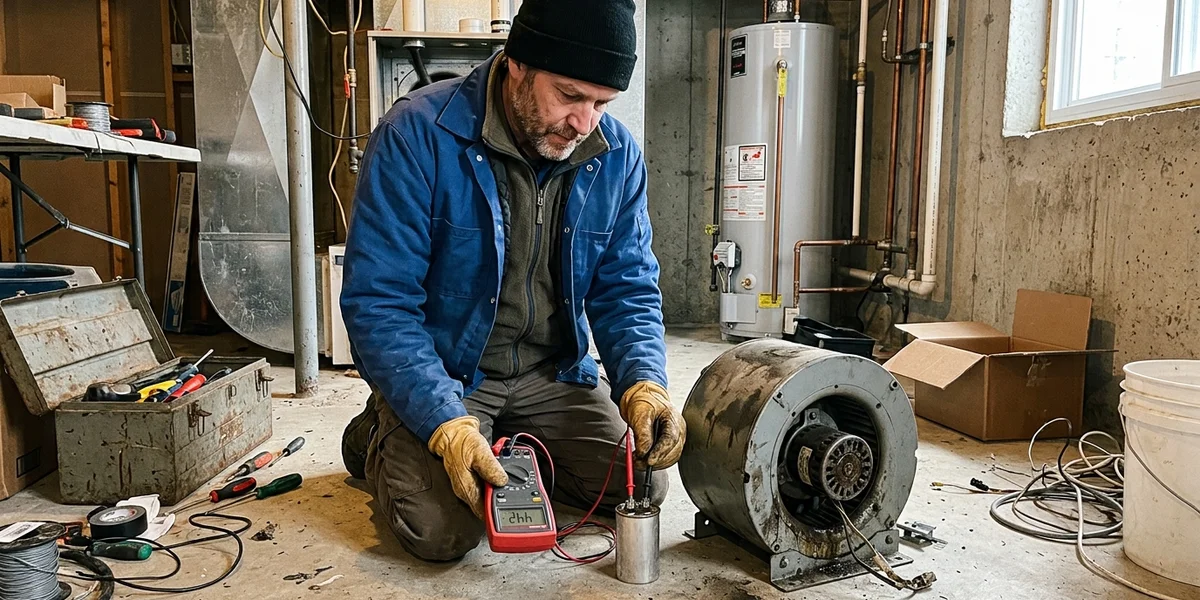
A run capacitor that drops below its rated capacity, usually 5 to 10 microfarads, produces almost exactly the same symptom set as a completely ruined PSC motor. You will hear a loud hum, see no fan rotation, and feel a motor housing that is blazing hot to the touch. We always take the extra five minutes to measure this small, battery-like component with a multimeter. The reading tells the exact truth about where the electrical failure is happening.
The financial difference between these two issues is massive for a homeowner. Replacing a simple run capacitor costs between $150 to $450 CAD. Our standard PSC blower motor replacement ranges from $450 to $750 CAD.
A lazy diagnosis can cost you hundreds of unnecessary dollars. Always ask your technician to show you the multimeter reading on the capacitor before approving a full motor replacement.
This exact scenario is the single most common situation where a Toronto resident ends up paying for an expensive part they did not actually need. We use a strict, written diagnostic sequence for every single service call to eliminate any guesswork.
Following a rigid checklist means the outcome is based on hard electrical data, rather than being left to a technician’s mood on that specific day. You deserve total transparency when approving a repair quote. Providing photo evidence of the multimeter reading is just one way a good contractor builds lasting trust.
How Much Does Blower Motor Replacement Cost in Toronto?
Pricing for HVAC repairs in the Greater Toronto Area can vary widely based on your specific equipment. We believe in providing clear, upfront estimates so you are never caught off guard by a final invoice. The table below outlines the current 2026 market rates for common airflow components.
| Work | CAD range |
|---|---|
| Diagnostic (waived on same-visit repair) | $99 to $149 |
| Run capacitor replacement | $150 to $450 |
| PSC blower motor replacement | $450 to $750 |
| ECM variable-speed motor replacement | $650 to $950 |
| Blower wheel cleaning or replacement | $199 to $549 |
Understanding the Price Gap Between PSC and ECM Motors
You might notice a significant price jump between a standard PSC motor and a variable-speed ECM motor. PSC (Permanent Split Capacitor) motors are older, single-speed workhorses that are cheaper to manufacture but cost more to operate on your monthly hydro bill. We install ECM (Electronically Commutated Motor) units in modern, high-efficiency furnaces because they use a built-in inverter and a permanent magnet rotor to maximize efficiency.
This advanced technology allows the ECM motor to adjust its speed precisely based on your home heating demand. Replacing an older PSC motor with an ECM alternative meaningfully cuts electrical consumption for air circulation. That drop in electricity usage often offsets the higher initial repair cost over the remaining life of your furnace.
What Causes Blower Motors to Fail Early
Restricted airflow destroys furnace motors faster than almost any other issue. A standard blower motor should easily last 10 to 15 years under normal operating conditions. We constantly find premature failures caused by simple maintenance mistakes that force the equipment to work twice as hard. The motor runs incredibly hot when it has to pull air through a blockage, which quickly degrades the internal electrical windings.
The Danger of High-MERV Filters on Older Furnaces
Many homeowners accidentally ruin their older systems by buying the most expensive, highest-rated allergy filter at the hardware store. Upgrading to a thick MERV 13 filter on an older furnace with a basic PSC motor is a guaranteed recipe for high static pressure. We recommend sticking to a MERV 8 pleated filter for older systems. This standard rating captures common dust and pet dander perfectly without suffocating the motor.
Other common airflow killers that spike your static pressure include:
- Leaving a basic filter in place for a full season.
- Undersized return ducts in older Toronto homes.
- Closing too many registers in unused rooms.
- A blower wheel completely caked in household dust.
Comprehensive Post-Repair Testing
That is exactly why the job does not simply end when the new motor finally spins. We measure the static duct pressure and the temperature rise directly against the original manufacturer specifications. Identifying a deeper airflow issue protects your brand new investment.
If the duct system itself is the underlying problem, you get that specific finding in writing with a separate, transparent quote for duct work ranging from $299 to $899 CAD. Solving the root cause is much better than buying a second replacement motor in just three years.
If the airflow problem turns out to sit in the furnace controls rather than the blower, see gas furnace repair. For a no-heat situation right now, see emergency furnace repair. The full set of published CAD scope bands is on the furnace repair Toronto homepage.
Conclusion: Getting Your Heat Back On
Dealing with a broken furnace fan is never fun, but identifying the problem early makes all the difference. We highly recommend addressing any strange noises or weak airflow before the system shuts down completely. Regular maintenance and proper filter choices will keep your new motor running smoothly for years.
Do not let a cold house ruin your week.
If you suspect your fan is failing, give us a call today to schedule a quick diagnostic check. We are ready to restore your comfort and peace of mind.