What Is a Gas Furnace Diagnostic in Toronto?
Have you ever woken up to a freezing house and a furnace that just blows cold air? We hear this exact frustration from property owners all winter long. Securing a proper gas furnace repair and diagnostic Toronto starts with finding the true cause.
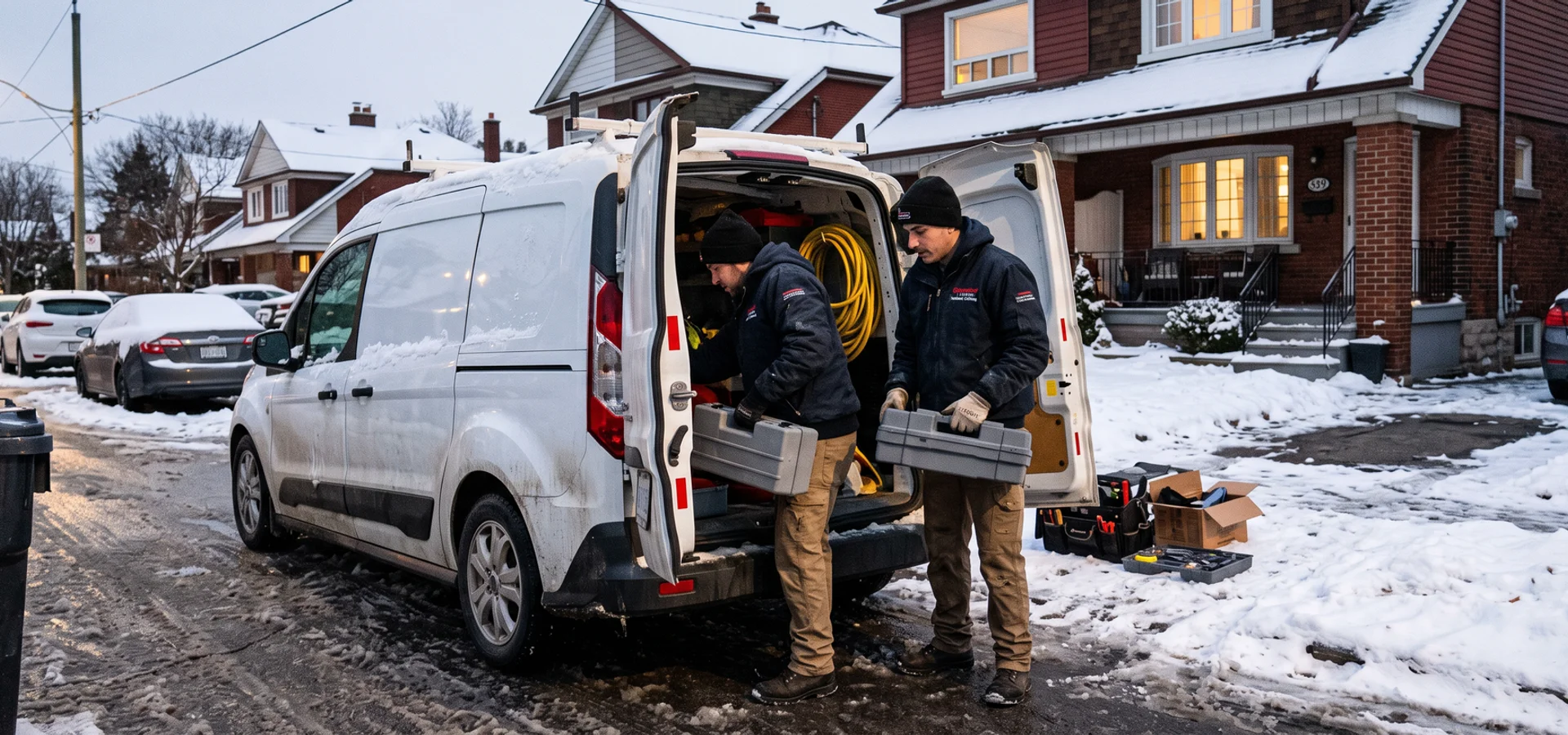
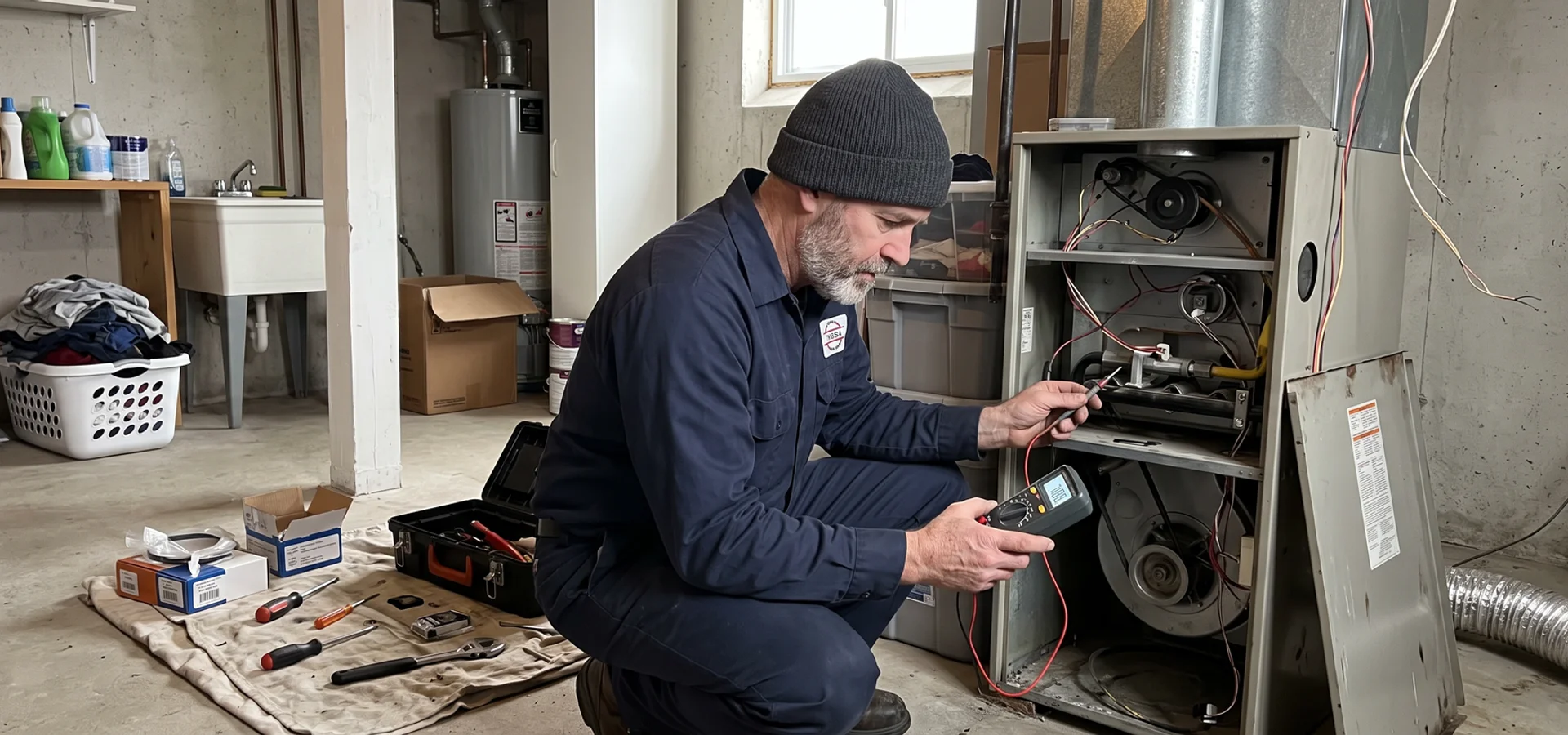
The process begins with a structured inspection by a TSSA G1 or G2 licensed technician. We carry out this evaluation under the strict Ontario B149.1 fuel code to protect your home. A proper test takes out the guesswork.
Guessing at symptoms often costs a homeowner a part that was never faulty.
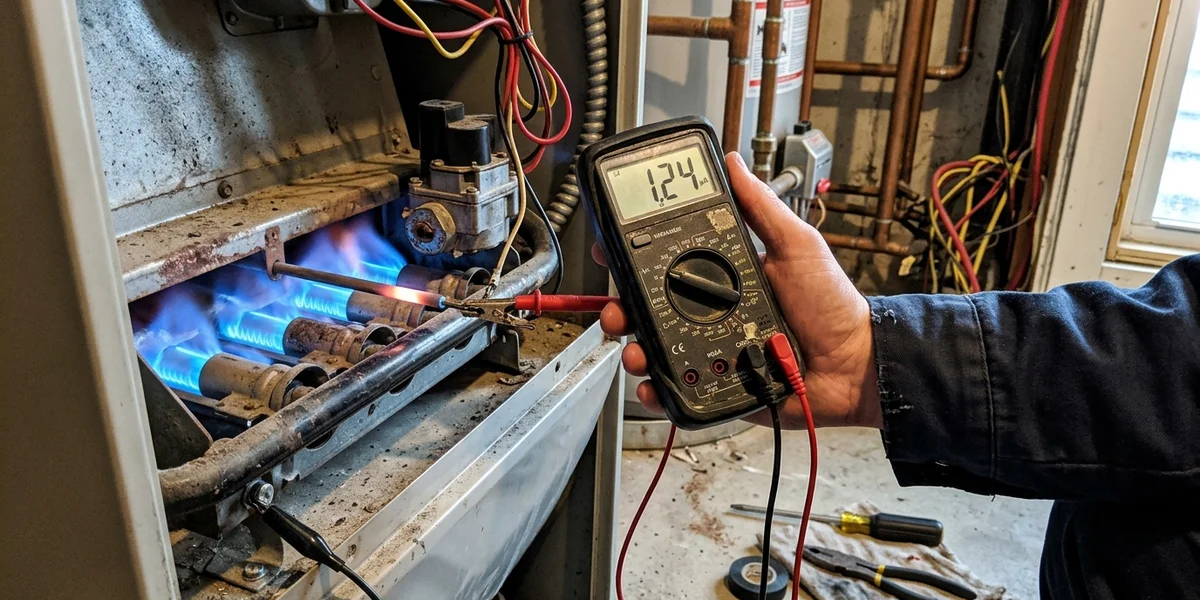
Our technicians evaluate the heat exchanger, ignition system, blower motor, and flame sensor rod. The gas valve, integrated furnace control board, flue draft, and thermostat response are also tested. A complete combustion analysis always includes a carbon monoxide reading.
“Health Canada warns that carbon monoxide issues send about 300 Canadians to the emergency room every year.”
Our base diagnostic starts at $99 CAD. This fee is completely waived when you authorize the repair on the same visit. Pricing stays completely transparent.
We publish standard part repairs at $150 to $950 CAD so you know what to expect. A furnace blowing cold air might simply be a thermostat wired to the wrong terminal.
9 Most Common Gas Furnace Problems in Toronto Homes
Many homeowners experience similar heating failures during a cold Canadian winter. Our team frequently encounters the same handful of part failures across the city. Condensate traps frequently freeze in Toronto due to extreme temperature drops.
Ignition and Airflow Faults
We start by checking the components that get the fire burning. The following issues cause the most immediate shutdowns.
- Oxidised flame sensor rod. Our technicians measure this component in microamps to see if it needs cleaning or replacement. The flame lights, but the board does not see it, causing the gas valve to close within seconds.
- Cracked hot surface ignitor. Resistance testing confirms a failure before anyone suggests a replacement. Silicon nitride ignitors typically fail after four to seven years of age and thermal cycling.
- Failed run capacitor. We often find that the blower hums but will not start. The motor might also start slowly and overheat quickly.
- Pressure switch not closing. A blocked condensate line or a plugged inducer port is usually the real culprit here. This problem is rarely the switch itself, but rather a failing draft inducer motor.
Mechanical and Safety Failures
Major components wear down after years of heavy use. We prioritize checking these faults because they require immediate attention to protect your property.
- Integrated furnace control board failure. A proper diagnostic reveals intermittent lockouts or a complete lack of response to a call for heat. Relays that stick closed are another common sign of a dead board.
- Gas valve or manifold pressure fault. We look for under-fired or over-fired burners during the physical inspection. Poor flame quality and elevated carbon monoxide on the combustion analyser point directly to this issue.
- Blower motor wear (ECM or PSC). Local power surges destroy many sensitive ECM motors over time. Weak airflow, high-limit trips, and short cycling often look like a control problem.
- Dirty burners and poor flame pattern. We clean away built-up soot to stop yellow or lifting flames. Rising carbon monoxide readings indicate that the burners need immediate servicing.
- Cracked heat exchanger. Mandatory camera inspections and combustion readings confirm this critical fault. A structural break legally requires a technician to issue an immediate Type A Gas Warning Notice and shut off your fuel under Ontario law.
5 Things Your Technician Should Check Before Quoting a Part
We never recommend replacing a part without proving it is broken first. Every proper service visit must include specific data points to verify the diagnosis.
- Flame rectification current. Our technicians measure the microamps at the sensor rod instead of just glancing at the flame. A simple visual check is never enough to diagnose a sensor failure.
- Manifold gas pressure. Testing this requires a highly sensitive digital manometer. The pressure must be checked across both stages on a dual-stage gas valve.
- Static duct pressure. We measure this airflow metric to rule out a restriction masquerading as a furnace fault. A healthy static pressure should sit around 0.5 inches of water column.
- Combustion analysis and CO. Checking for carbon monoxide is mandatory because a furnace that runs is not automatically a furnace that is safe. Health Canada enforces an indoor exposure limit of 10 parts per million for carbon monoxide.
- Flue draft and venting condition. Our inspection covers System 636 venting on condensing units and the complete condensate path. Blocked vents create severe safety hazards during heavy snowfall.
How Much Does Gas Furnace Repair Cost in Toronto?
Clear pricing helps you make the best decision for your home. The published bands below cover the overwhelming majority of Toronto gas furnace repairs.
| Service Category | Estimated Cost in CAD | Typical Components Involved |
|---|---|---|
| Diagnostic Visit | $99 to $149 | Initial testing, combustion analysis, travel |
| Standard Repairs | $150 to $950 | Flame sensors, ignitors, capacitors |
| Major Component Work | $500 to $1,500 | Heat exchangers, draft inducers, blower motors |
Our base diagnostic fee runs from $99 to $149 CAD during regular business hours. Standard part repairs run $150 to $950 CAD depending on the specific component. We handle major component work, including heat exchangers and draft inducers, for $500 to $1,500 CAD.
Our published rates cover the licensed technician’s time plus fully stocked trucks, commercial insurance, and ongoing factory training.
What changes the final number inside a pricing band is the physical access and configuration of the unit. We find that replacing a blower motor in a tight heritage mechanical room in The Annex takes longer than swapping the same motor in an open suburban basement in Maple. The written quote always names both the part and the labour before you approve the work.
When a Repair Stops Making Sense
We always aim to fix your equipment whenever it is safe and practical. Three specific situations move the recommendation from a repair directly to a replacement.
- Cracked Heat Exchanger: Our technicians must red-tag the unit for your safety. The heat exchanger repair page covers the specific safety diagnosis for this dangerous issue.
- System Age Over 20 Years: Older units suffer from repeat failures across different components. Parts for two-decade-old systems become very difficult and expensive to source.
- High Repair Costs: We advise a full replacement when a fix approaches half the installed cost of a 95% AFUE unit. Factoring in the efficiency gap makes a new installation the smarter financial choice.
You will receive a written comparison rather than a verbal push for each of these situations. As an ENERGY STAR certified installer, we also factor the Enbridge Home Efficiency Rebate Plus (up to $6,500 CAD) and the Canada Greener Homes Grant (up to $5,000 CAD) into the math on qualifying replacements to show you the true cost difference.
Check out our furnace replacement Toronto guide to understand the complete scope and rebate filing process. We keep our pricing totally transparent for every customer. The full set of published scope bands across every service is available on the main furnace repair Toronto page.
A professional gas furnace repair and diagnostic Toronto ensures your home stays comfortable all winter long. Our primary goal is getting your property warm again quickly.
We encourage you to call our office today to schedule your priority service visit. Prompt action prevents small problems from turning into freezing emergencies.