What Is Furnace Ignition Repair in Toronto?
Have you ever woken up to a freezing home in the middle of January?
We know exactly how stressful that situation can be. Finding fast furnace ignition repair in Toronto becomes your only priority.
Toronto winters are completely unforgiving, with recent seasonal temperatures hovering around -5 to -10 degrees Celsius. The massive 160 cm snowfall in the 2025/2026 winter pushed local heating systems to their absolute limits.
“A well-maintained furnace ignition system is the only thing standing between you and a freezing Toronto winter.”
Furnace ignition failure is the single most common reason a furnace fails to start on a cold morning. We diagnose and repair the specific components that light and confirm the burner flame on your gas furnace.
These parts include the hot surface ignitor, direct spark ignitor, standing pilot assembly, flame sensor rod, thermocouple, and the ignition control module. Our TSSA G1 or G2 licensed technicians handle every step carefully under the Ontario B149.1 fuel code.
Hot surface ignitor replacement runs $300 to $650 CAD, flame sensor work runs $150 to $450 CAD, and pilot and thermocouple work runs $250 to $550 CAD. We charge an initial diagnostic of $99 to $149 CAD, and that fee is completely waived on a same-visit repair.
The 3 Ignition Types and How Each One Fails
Hot Surface Ignition (HSI)
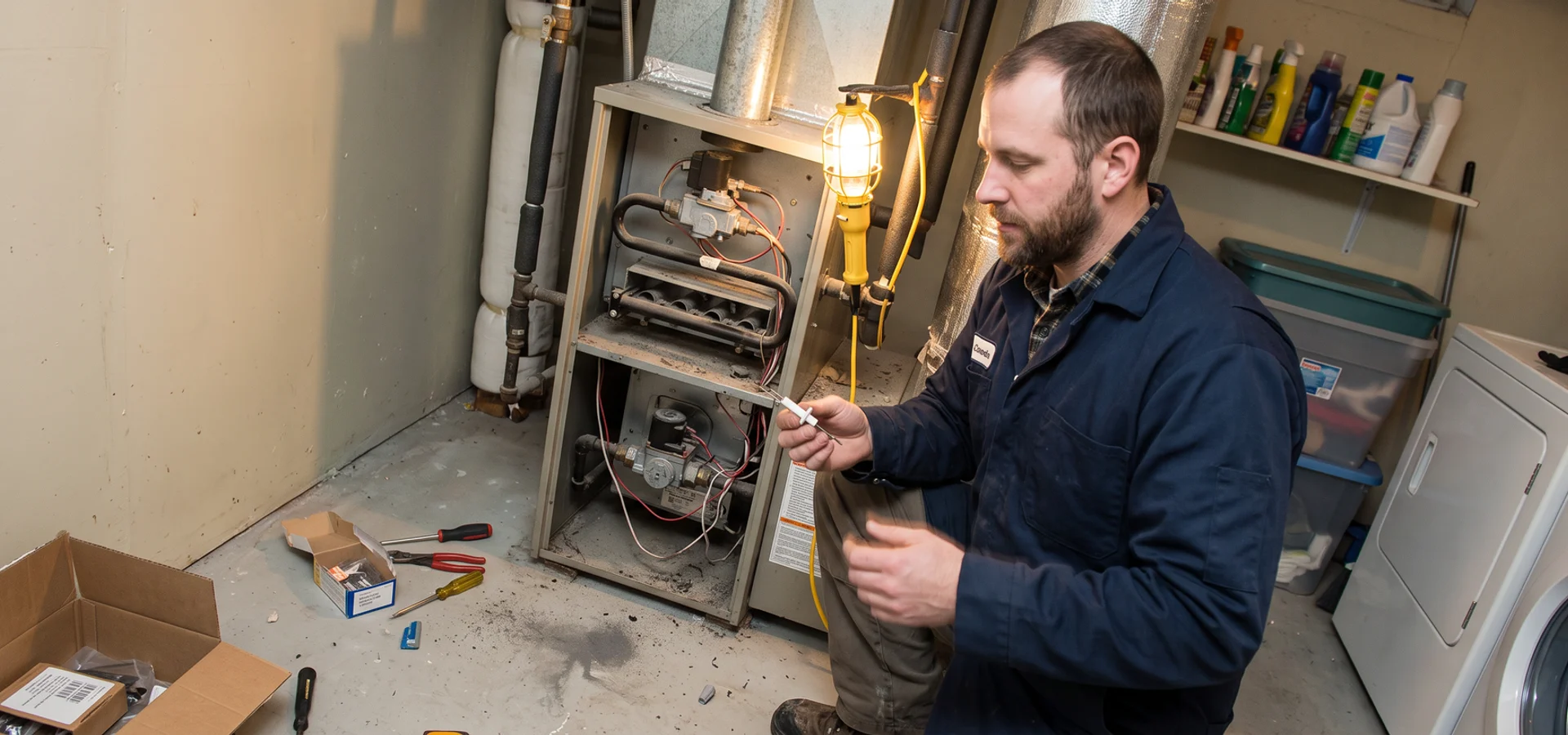
Most modern furnaces use a hot surface ignitor made of silicon nitride or carborundum. We frequently replace these elements because they glow red hot to light the burners and naturally degrade over time. Failure usually appears as a tiny crack from constant thermal stress.
Our technicians confirm a failed HSI by looking for an out-of-range resistance reading in ohms using a multimeter. Typical service life for this part is 4 to 7 years. You should never touch a new carborundum ignitor with bare hands. The natural oils from your skin create hot spots on the element, which will cause it to burn out and fail almost immediately.
Direct Spark Ignition
Direct spark setups use a high-voltage electrode that arcs to light the burner directly. We see failures here coming from electrode erosion, cracked ceramic insulators, or an incorrect spark gap. The gap between the sparking tip and the ground is usually around 1/8 inch, and even a tiny misalignment prevents ignition.
Our diagnostics also test the spark generator on the main control board. A faulty board will fail to send the necessary voltage to the electrode.
Standing Pilot
Standing pilots are an older arrangement where a small flame burns continuously. We rarely see these on brand-new units, but many older Toronto homes still rely on them. A thermocouple sits directly in the flame and generates a tiny electrical current measured in millivolts.
Our rule of thumb is that a healthy thermocouple should generate about 30 millivolts. The gas valve will close safely if that output drops below 15 millivolts due to a drafty pilot, a misaligned orifice, or a worn-out thermocouple. A dirty pilot orifice completely blocks the gas flow, which starves the tiny holding flame.
5 Ignition Symptoms and What They Usually Mean
Here are the five most common warning signs and the typical underlying causes.
- Clicks or glows, never lights. The ignitor might be out of specification. We often find that the gas valve is not opening, or a pressure switch is failing to close upstream.
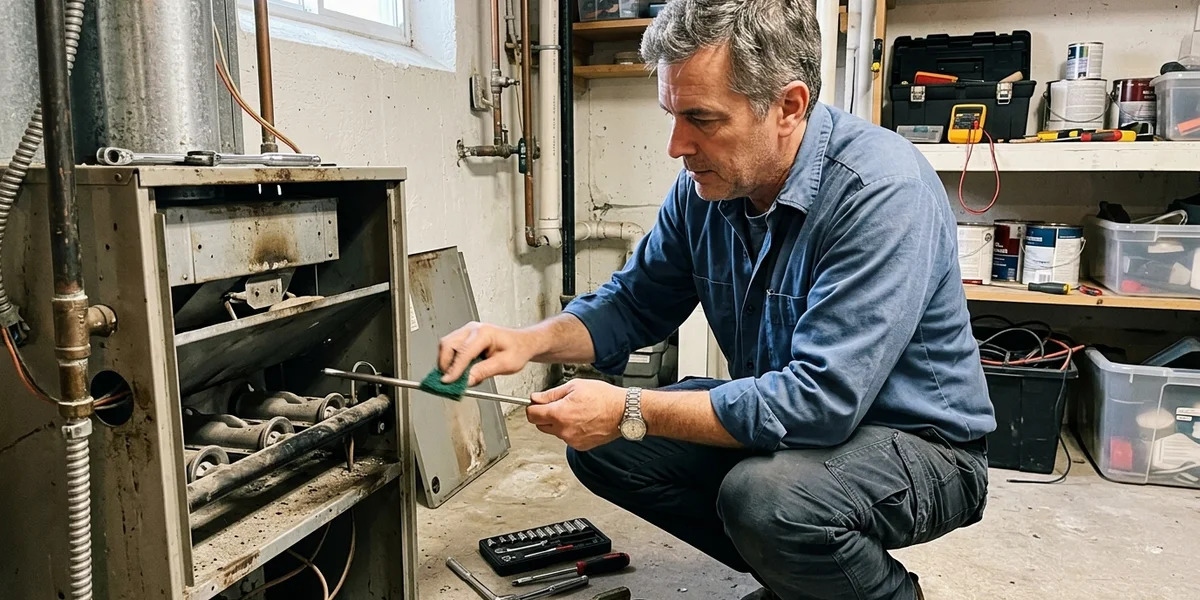
- Lights then shuts down within seconds. This indicates a flame rectification failure. Our most frequent fix for this is cleaning a dirty flame sensor rod, though it can sometimes be a grounding fault. Pro tip: Never clean a flame sensor with coarse sandpaper. Sandpaper leaves behind silica grit in the metal grooves, which acts as a heat insulator and ruins the rod. We recommend using 0000 steel wool or a soft Scotch-Brite pad instead.
- Three attempts then stops entirely. Your furnace has gone into a hard ignition lockout. The control board has done its job to protect the system. We advise calling for service, as a lockout often points to a serious ventilation block or a failing gas valve. Repeatedly cutting the power to reset the board is the wrong response and can be dangerous.
- A bang on ignition. This loud noise means you have delayed ignition, where gas accumulates in the chamber before finally lighting. Our technicians take this very seriously because the miniature explosion puts massive pressure on the delicate heat exchanger. You need to get this checked promptly to prevent carbon monoxide risks.
- Pilot will not stay lit. The thermocouple output has likely dropped below what the gas valve needs to stay open. We also check if the pilot flame is cleanly enveloping the thermocouple tip correctly.
How Much Does Ignition Repair Cost in Toronto?
Pricing should be completely transparent, especially during high-demand months. We provide clear estimates so you know exactly what to expect before any tools come out. Our standard fees keep things simple and predictable.
| Work | CAD range |
|---|---|
| Diagnostic (waived on same-visit repair) | $99 to $149 |
| Flame sensor cleaning or replacement | $150 to $450 |
| Hot surface ignitor replacement | $300 to $650 |
| Pilot assembly and thermocouple | $250 to $550 |
| Ignition control module | $300 to $650 |
Ignition parts are inexpensive relative to the rest of the furnace. We prioritize an accurate diagnosis over a fast one for exactly this reason. Replacing an ignitor when the actual fault is a dirty flame sensor leaves you with the exact same no-heat call a week later. Our goal is to fix the right component the first time, saving you from paying a premium after-hours rate on a repeat visit.
When an Ignition Fault Points at Something Else
A repeat ignition failure inside twelve months is a clear warning signal, not just bad luck. We always dig deeper when a new part fails prematurely. The Technical Standards and Safety Authority (TSSA) notes that poor maintenance is a major contributing factor to fuel-related risks in Ontario homes.
Our technicians look for several specific underlying issues before fitting a second replacement part:
- Excessive short cycling that thermally hammers the ignitor.
- Incorrect manifold pressure on the gas valve.
- A failing relay on the main control board.
- A flame sensing problem that traps the board in a permanent retry loop.
We test the gas valve output using a digital manometer, confirming the standard 3.5 inches of water column for natural gas. This extra effort prevents you from paying an annual ignitor bill on a furnace that actually has a completely different problem.
For the wider diagnostic across the gas train and controls, see gas furnace repair.
Our emergency dispatch team is ready if your furnace is off right now in freezing weather, so just review emergency furnace repair. Getting reliable furnace ignition repair in Toronto shouldn’t be a hassle.
The full set of published CAD scope bands is always available on the furnace repair Toronto homepage.