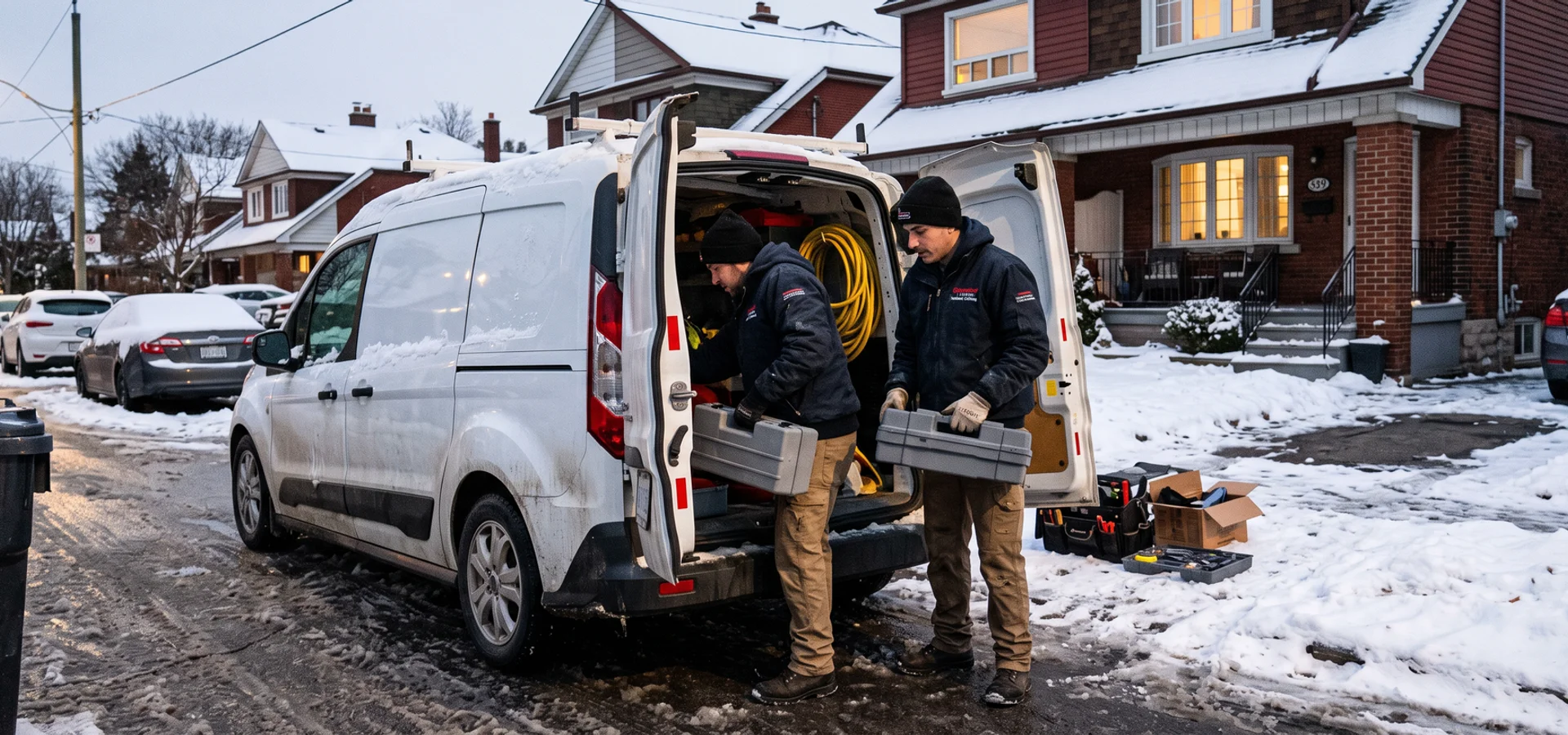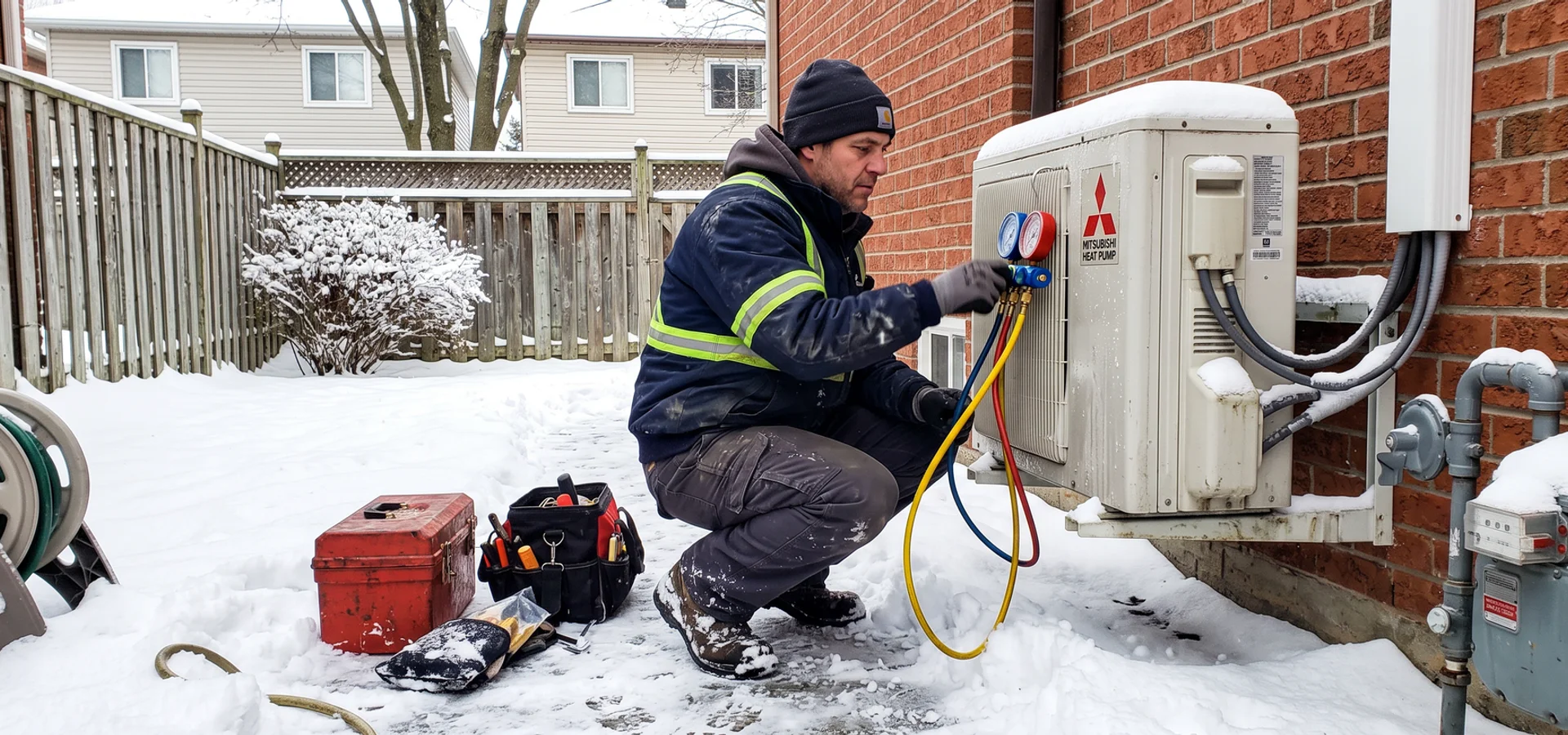
Have you ever woken up freezing because your system decided to quit on the coldest night of the year? That sudden drop in temperature is a stressful experience, especially if you need Heat Pump Repair and Cold-Climate Heating Toronto services right away.
Our team sees this panic all winter long across the GTA.
Fixing the problem quickly is a priority. You will find everything you need to know about getting your home warm again right here. Let’s go through it together.
What Is Heat Pump Repair and Cold-Climate Heating Toronto?
Cold-climate heat pump repair in Toronto is the diagnosis and fixing of air-source systems rated for Ontario winters. These powerful machines typically handle temperatures down to minus 25 Celsius.
They rely on specialized parts like inverter-driven compressors, reversing valves, and defrost control cycles. The repair process also covers checking the refrigerant charge, auxiliary electric heat strips, and the thermostat balance point on dual-fuel setups paired with a gas furnace.
Breaking Down Repair Costs
Our initial diagnostic fee runs $99 to $149 CAD. This fee is entirely waived if you choose a same-visit repair. Common jobs like defrost control work run $350 to $850 CAD.
Reversing valve replacements usually cost between $600 and $1,500 CAD.
Sometimes a repair bill gets too high, making a full replacement the smarter choice. A complete cold-climate installation ranges from $6,500 to $14,500 CAD.
Rebates for Replacements
We highly recommend looking into current rebates if you go this route. As an ENERGY STAR certified installer, we help you check eligibility for the Enbridge Home Efficiency Rebate Plus (up to $6,500 CAD) and the Canada Greener Homes Grant (up to $5,000 CAD), and file the paperwork on your behalf. This discount makes a new installation much more affordable.
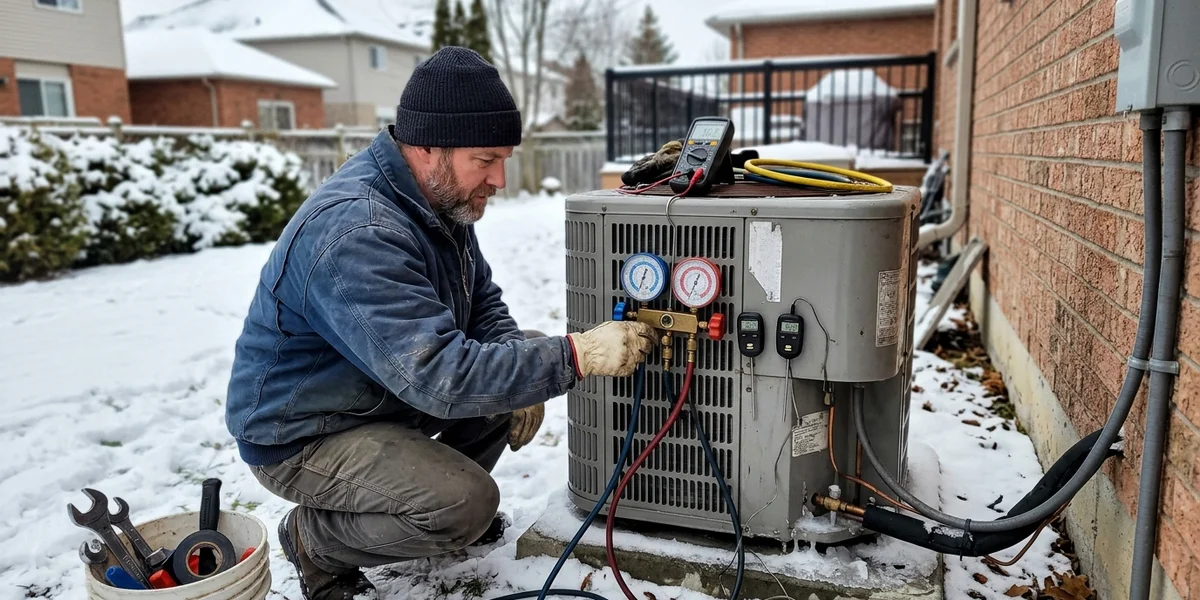
Heat Pump vs Gas Furnace Cost of Ownership Over 10 Years
The honest answer is that it depends on three things. Your local electricity and gas rates, how well your home holds heat, and whether you are also replacing an air conditioner play huge roles. A heat pump that eliminates a separate AC replacement changes the arithmetic considerably.
Our customers often ask how Toronto Hydro rates affect these costs. Taking advantage of the Ultra-Low Overnight rate plan is a fantastic strategy. This plan drops electricity costs to just 3.9 cents per kWh between 11 PM and 7 AM.
We suggest setting your smart thermostat to pre-heat the house during these cheap hours. This simple habit keeps your home warm while saving a significant amount compared to the 39.1 cent on-peak daytime rate.
| Factor | Cold-climate heat pump | Gas furnace |
|---|---|---|
| Installed cost | $6,500 to $14,500 CAD | $3,500 to $8,500 CAD |
| Provides cooling | Yes | No, needs separate AC |
| Winter energy cost | 30 to 50 percent below electric resistance | Depends on gas rate and AFUE |
| Performance below -20 C | Reduced capacity, backup typically engages | Full capacity |
| Typical service life | 12 to 18 years | 15 to 25 years |
| Rebate eligibility | Frequently eligible | Eligible on 95% AFUE conversions |
This is why most GTA installations end up dual-fuel. The heat pump carries the long shoulder seasons and moderate cold efficiently. A gas furnace takes over during deep cold nights when running the compressor stops being economical.
5 Heat Pump Faults We See Most in GTA Winters
Winter weather pushes outdoor units to their limits. A few specific issues pop up repeatedly during Toronto freeze-thaw cycles.
Our technicians constantly run into these five common hardware and configuration faults.
- Defrost control or sensor failure. The outdoor coil ices over and never clears. Capacity collapses, and expensive auxiliary heat runs constantly.
- Reversing valve not shifting. The system stays in cooling mode or fails to switch cleanly. This presents as blowing cold air in the middle of heating season.
- Low refrigerant charge. You will notice reduced capacity in cold weather before it is ever noticeable in summer. Heating is where the margin is thinnest, making proper charge levels critical.
- Inverter or compressor control faults. These are brand-specific fault codes that need the manufacturer’s diagnostic sequence. Generic troubleshooting does not work here.
- Balance point and thermostat misconfiguration. This is not a hardware failure at all, but it is by far the most common cause of high bills. Many people leave their ecobee or Nest balance point at the default 0 degrees Celsius.
We always recommend setting the compressor lockout on premium units like a Mitsubishi closer to minus 10 or minus 15 degrees Celsius. This forces the system to use the efficient heat pump longer before switching to gas.
Another common mistake is letting snow build up around the outdoor unit. Keep at least 12 to 18 inches of clearance around the coil so the system can pull in enough air to function.
What Cold-Climate Installation Involves
A proper installation includes the outdoor unit, the indoor coil or air handler, and the refrigerant lines. It also requires an electrical supply with ESA-verified connections, condensate management, and a compatible thermostat.
The technician will configure the balance point and auxiliary staging to match your specific home. Where the system is paired with an existing furnace, the furnace side is inspected at the same time. A dual-fuel setup is only as reliable as its weaker half.
Meeting Local Code Requirements
Our installation process always accounts for local Toronto building codes. The outdoor unit must be mounted on specialized snow stands.
These stands keep the unit at least 12 to 18 inches off the ground to prevent snowdrifts from blocking the airflow.
We also handle the required Electrical Safety Authority permit. This permit costs about $250 to $500, but it guarantees that all wiring meets provincial safety standards.
Average Installation Pricing
Installed cost runs $6,500 to $14,500 CAD depending on capacity, ducted or ductless configuration, and the required electrical work.
A full ductless split system for an addition or a zoned space runs $4,500 to $9,500 CAD. These smaller setups are perfect for sunrooms or older homes without existing ductwork.
When a Heat Pump Is Not the Right Answer
There are three distinct situations where you are better off staying with gas.
- Undersized Electrical Panels: Older homes in Toronto neighborhoods like the Danforth often still have a 100-amp electrical panel. Upgrading to a 200-amp panel to support a heat pump adds real cost and a Toronto Hydro disconnect fee on top of the equipment price, so we quote that separately once we see your panel.
- Inadequate Ductwork: Ducts that cannot deliver the higher airflow a heat pump needs will lead to poor performance and cold spots.
- Leaky Home Envelopes: If the heating load at design temperature exceeds what the equipment can realistically carry, the system will run constantly without keeping you warm.
If you did not budget for a panel upgrade or major duct modifications, sticking with your current fuel source makes sense. In those cases, the better spend is usually a high-efficiency furnace conversion with the rebates filed.
We maintain a full set of published CAD scope bands to help you plan. You can find them right on the furnace repair Toronto homepage.
Give our team a call today to schedule your assessment. Let us provide the best Heat Pump Repair and Cold-Climate Heating Toronto has to offer, keeping your home warm all winter long.